Mostrando entradas con la etiqueta Jimmy Carter. Mostrar todas las entradas

sábado, 4 de enero de 2025

Netanyahu elogia a Carter por el tratado de paz con Egipto: “Siempre recordaremos su papel”

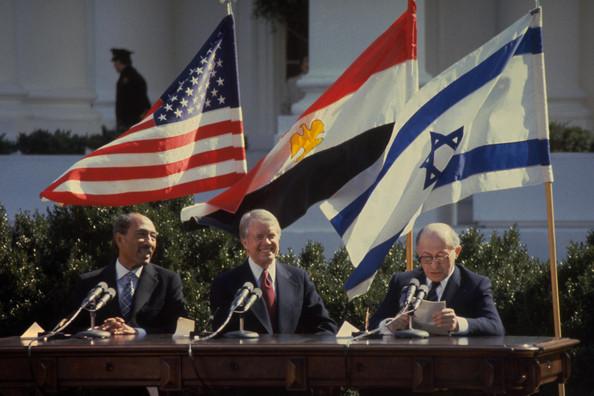
Anwar al Sadat, Jimmy Carter y Menachem Begin tras la firma de los acuerdos de paz en Whashington en 1979 Foto: Sa'ar Ya'acov / GPO

El primer ministro, Benjamín Netanyahu, dijo a través de su oficina este lunes que “siempre recordarán el papel” del expresidente estadounidense Jimmy Carter en la firma del tratado de paz entre Israel y Egipto durante la década de los setenta.

“Siempre recordaremos el papel del presidente Carter en la creación del primer tratado de paz árabe-israelí firmado por el primer ministro, Menáchem Begin, de Israel y el presidente, Anwar el Sadat, de Egipto”, recoge un mensaje publicado en redes sociales un día después del fallecimiento de Carter a los 100 años.

domingo, 17 de julio de 2022

US president visiting Israel: A dream now commonplace - opinion

Although now seemingly a routine occurrence, it is easy to forget that for more than a quarter-century, consecutive American presidents refrained from visiting the Jewish state.

AFTER ADDRESSING the Knesset, then-US president George W. Bush receives applause from Israeli counterpart Shimon Peres, and Dalia Itzik, who served as Knesset speaker, in 2008.     (photo credit: LIOR MIZRAHI/FLASH90)

Israelis were delighted to see US President Joe Biden touch down at Ben-Gurion Airport, his visit reminding them of Israel’s robust alliance with the world’s preeminent power. Although now seemingly a routine occurrence, it is easy to forget that for more than a quarter-century, consecutive American presidents refrained from visiting the Jewish state.

viernes, 21 de mayo de 2021

J Street to present Jimmy Carter with peacemaker award at its annual conference

Former President Jimmy Carter discusses his cancer diagnosis during a news conference at the Carter Center in Atlanta, Aug. 20, 2015. (Jessica McGowan/Getty Images)

(JTA) — J Street, the liberal pro-Israel group, is presenting Jimmy Carter with a peacemaker award at its conference, recognizing the former president, who has frequently tangled with the mainstream pro-Israel community, for brokering the 1979 Egypt-Israel peace.

“By helping to broker the incredible Camp David Accords between Israel and Egypt, President Carter demonstrated that determined American diplomacy can end decades of conflict and bring together even the most determined foes,” J Street President Jeremy Ben-Ami said Monday in a release sent to the Jewish Telegraphic Agency.

lunes, 10 de mayo de 2021

¿Por qué es crucial educar sobre los derechos de Israel a la tierra? –

La Declaración Balfour del 2 de noviembre de 1917, seguida de la Conferencia de San Remo en 1920, puso en marcha el desarrollo del moderno Estado judío de Israel.


Ha llegado el momento – de hecho, hace mucho tiempo – de educar a los estudiantes en edad de la escuela secundaria y universitaria, comenzando en Israel, y eventualmente a los jóvenes judíos y no judíos, y al público en general, sobre los derechos legales de Israel. ¿Cuántas veces se les ha dicho a nuestros estudiantes de secundaria y universitarios judíos que el sionismo es colonialismo y que los judíos son opresores blancos que limpiaron étnicamente Palestina de musulmanes? Demasiadas veces.

domingo, 12 de enero de 2020

Donald Trump and the mythmakers


For the past 40-odd years, two narratives have guided American Middle East policy. Both were invented by the Carter administration. One relates to Iran. One relates to Israel.

Both narratives reject reality as the basis for foreign policy decision-making in favor of delusion. Over the past two months, President Donald Trump has rejected and disavowed them both. His opponents are apoplectic.

domingo, 1 de diciembre de 2019

Israel’s long range artillery weapon threatens targets deep in the enemy’s territory

There is a concept that says that Israel will achieve peace when they have superior fire power. There is definitely some truth to this. But it is just one part of the impossible puzzle in the Middle East. Part of the problem is that it is not clear that the goal should be peace. There are reasonable people who have argued quite convincingly that the goal should merely be a state wherein the Arab belligerents nearby the State of Israel are intimidated enough so that they will lose every incentive to terrorize the State of Israel. That of course is not the definition of peace. But it would lead to the absence of war – at least temporarily.


sábado, 27 de julio de 2019

Testigo directo: ex agente del Mossad en Irán, analiza la crisis actual

Eliezer "Gueizi" Tsafrir, último jefe de misión del Mossad en Irán antes de la revolución islámica.


Eliezer (Geizi) Tsafrir (85) lo vio venir. Estuvo allí , en Irán, cuando estalló la revolución islámica del Ayatolla Ruollah Khomeini. Hoy, más de 40 años después, observa con detalle la crisis en el Golfo Pérsico, analiza lo que ve como provocaciones iraníes y lamenta que el pueblo de Irán viva “bajo este régimen de dementes”.

Fue el último jefe de misión del Mossad en Irán cuando cayó el Shah Pahlevi y vio con sus propios ojos el cambio de la historia.También había sido el último jefe del Mossad en Kurdistán, en cuyo marco ayudó durante diez años a los kurdos en su lucha contra Irak, especialmente contra el régimen de Saddam Hussein.

lunes, 5 de diciembre de 2016

Jimmy Carter’s proposal to recognize Palestine is dissed by all the usual suspects


**FILE**Former President Jimmy Carter takes a question during a conference at The Carter Center in Atlanta, Tuesday, June 7, 2005. An independent panel Wednesday, Aug. 24, 2005 reversed a Pentagon recommendation that the New London submarine base in Connecticut, base be closed. One of the panel members even said a letter from Carter _ the only president to ever serve as a submariner _ pleading the panel to keep the base open was one of the reasons he voted against closure. (AP Photo/Ric Feld, File)


As you surely heard, former President Jimmy Carter had a big op-ed in the New York Times two days ago urging President Obama to recognize Palestine in what little time he has left in the White House, as a step to maybe save the two-state solution.

United States recognition of a Palestinian state would… clear the way for a Security Council resolution on the future of the Israeli-Palestinian conflict.

The Security Council should pass a resolution laying out the parameters for resolving the conflict. It should reaffirm the illegality of all Israeli settlements beyond the 1967 borders, while leaving open the possibility that the parties could negotiate modifications…

The combined weight of United States recognition, United Nations membership and a Security Council resolution solidly grounded in international law would lay the foundation for future diplomacy…

This is the best — now, perhaps, the only — means of countering the one-state reality that Israel is imposing on itself and the Palestinian people. Recognition of Palestine and a new Security Council resolution are not radical new measures, but a natural outgrowth of America’s support for a two-state solution.


The next day the State Department said it doesn’t care what Carter says:

John Kirby: Well, obviously, we have great respect for former President Carter and for his tireless efforts to achieve peace while he was in office and certainly in the years following his presidency. He’s a great American. Our view hasn’t changed that we believe that the preferred path for the Palestinians to achieve statehood is through direct negotiations that will lead to a just, lasting, and comprehensive peace based on a two-state solution…

QUESTION: It’s not expected to happen in the next six weeks, is it?

MR KIRBY: I’m not a fortuneteller.


Here’s Secretary of State John Kerry’s comment on the conflict, indicating that nothing will happen in the next two months:

“[N]o one has expended as much time as I have to try to move the process forward.”

“But the old saying is real: You can lead a horse to water, you can’t make him drink,” he said. “If they’re not prepared to take the risks – everybody knows what has to be done – but if they’re not ready, then there’s no way to force-feed it. There are, however, other things that we can do that may try to save the possibilities of a two-state solution, and we have to think about that.”


The Associated Press reports that Obama will do nothing in the next two months:

President Barack Obama has nearly ruled out any major last-ditch effort to put pressure on Israel over stalled peace negotiations with the Palestinians, U.S. officials said, indicating Obama will likely avoid one last row with Israel’s government as he leaves office.

Frustrated by the lack of progress, Obama for more than a year had considered giving a major speech describing his vision for a future peace deal or, in a more aggressive step, supporting a United Nations resolution laying out parameters for such a deal…

Discussions about those potential maneuvers, under way before the U.S. election, have fallen off since Donald Trump’s surprise victory, officials said. Obama is now highly unlikely to approve either of those options presented to him by U.S. diplomats, said the officials, who weren’t authorized to discuss internal deliberations and requested anonymity.


The Israel lobby group AIPAC also got into the act this week, applauding a bipartisan piece of legislation passed by Congress that opposes any “unilateral” efforts to impose a solution, including Carter’s idea–

“any widespread international recognition of a unilateral declaration of Palestinian statehood outside the context of a peace agreement with Israel…”


And just in time, there is also opposition to Carter’s suggestions from two veteran peace processors, liberal Zionist Aaron David Miller and centrist Zionist Dennis Ross. Miller writes at CNN that Carter’s recommendation will “leave the Obama legacy in tatters,” because Donald Trump will only upend the move — and maybe hurt the Israelis’ feelings, too.

As hard as it may be to accept right now, a unilateral move might make matters worse…

First, any initiative undertaken during the presidential transition in the United States would need to address not just Palestinian needs, but those of Israelis, too. No administration I’ve ever served in took a unilateral, consequential step related to the peace process that didn’t bear this fundamental principle in mind…

Second, US recognition of Palestinian statehood would almost certainly buoy Palestinian hopes — but alienate the Israeli government, while having little appreciable impact on the realization of Palestinian statehood.


And of course Israelis would do whatever they wanted, and we’d have nothing to say about it, that’s how the special relationship works, Miller lobbysplains:

In response to any unilateral declaration, the Israelis — already deeply committed to settlements — would likely respond with steps of their own that go beyond what they are already doing, such as building heavily in east Jerusalem, moving forward on the controversial E-1 project and perhaps even annexing portions of the West Bank.


Dennis Ross in the Washington Post seems to be auditioning for a job in the Trump administration. He calls Secretary of State John Kerry’s pursuit of peace “quixotic” and offers advice to Donald Trump on how to bring about the “ultimate deal.”

Can the Trump administration succeed where others have failed? Trump surprised the world by getting elected; if he is to surprise the world on Israeli-Palestinian peacemaking, he will need to keep the following guidelines in mind:


Ross offers his usual suggestion, Israel should stop building outside the “settlement blocs.” And the Palestinians have to stop trying to “delegitimize Israel in all international forums.”

He says the key is to involve the Arab states as a “cover” for the Palestinians and to “compensate” the Palestinians. That’s code for ending the refugee crisis.

Test privately, therefore, whether Arab state cover is possible in the negotiations. Ironically, both sides need the Arabs — with the Palestinians needing a cover even to talk, much less concede anything, and the Israelis believing only the Arabs can compensate for concessions they make to the Palestinians.


It’s sure looking like another few years of Washington-and-Netanyahu trying to keep the conflict on perpetual hold.

BTW, the other night at Temple Israel in New Rochelle, Jonathan Kuttab, the Palestinian human rights lawyer, said it’s not about statehood anyway; the two-state solution is over; and having a flag and passports means nothing to Palestinians if they are still occupied and don’t have rights. That’s going to be the real debate, going forward in the one-state reality.


01/12/2016 by MONDOWEISS.


miércoles, 27 de enero de 2016

What Is Richard Branson’s Problem With Israel?


Richard Branson is the business magnate who heads the venture capital conglomerate Virgin Group, known best for its Virgin Atlantic airlines and Virgin Mobile wireless communications brand. He has been dubbed a master at business and public relations, and has accrued billions of dollars through his dealings.

I have met him on a few occassions. Once, in Oxford, when he opened a restaurant with my friend, world-renowed chef Raymond Blanc. And again at the World Economic Forum in Davos. On both occassions he was friendly, approachable and very down-to-earth.

But a little known and unfortunate fact about Branson is his strange, anti-Israel opinions and activities that are beneath a man known for having a good and kind heart.

In 2007, Branson founded an organization called “The Elders,” which was made up of a council of 12 elder statesmen who would serve as “independent global leaders working together for peace and human rights.” One of the top goals and priorities of this organization is to inject itself into the Israeli-Palestinian conflict and influence its outcome. Branson sits on the The Elders Advisory Council and uses his massive wealth to fund the organization. Unfortunately, the elders whom Branson selected for his new group are a Who’s Who of some of the most tenacious, anti-Israel public figures in the world today. The Elders’ anti-Israel statements and press releases condemning the Jewish state are a sad testament to this fact.

Topping the Elders’ list is former President Jimmy Carter, a man dedicated to the disgustingly fraudulent and antisemitic proposition that Israel is an apartheid state. Carter’s defamatory fabrications about the Jewish state include the lie not only that Israel is like apartheid South Africa, but that “voices from Jerusalem dominate our media.” Last year he claimed Netanyahu wasn’t interested in making peace, but said about Hamas’ arch terrorist leader Khaled Meshal, “I don’t believe that he’s a terrorist. He’s strongly in favor of the peace process.” It has been shown that the Carter Center receives tens of millions from countries with appalling human rights records that are dedicated to Israel’s delegitimization including Saudi Arabia, Oman and the UAE. He also received $500,000 from the antisemitic, terrorist-supporting Zayed Center, whose efforts he went on to praise the following year. The list of Carter’s actions and statements against the Jewish state are degrading to the august office of the presidency of the United States, even if they were stated after the fact.

Yet in 2014, Branson named Jimmy Carter as one of his “top five most respected people in the world,” and a man “ahead of his time.” At a conference in Egypt, Branson introduced Carter as “Perhaps arguably the most remarkable person alive today.” After pressing the audience to give Carter a second round of applause, Branson announced, “I think it’s fair to say that he’s one of the few people in this world who has stayed faithful to the Palestinians.”

Branson is a brilliant man. Does he really believe that someone who has allowed the Palestinians to continue in their self-defeating terror path is loyal to their cause? Surely Branson is aware that the only people dedicated to the Palestinians’ welfare are those who encourage them to democratize, spend money on schools rather than bombs, invest in universities rather than rockets and teach their children to love their own heritage rather than hate the Jews.

Other “elders” in Branson’s organization include the notoriously anti-Israel, antisemitic Bishop Desmond Tutu, whom I have also met on several occasions, including at the Oxford Union. Tutu is a supporter of the BDS movement, calling for an economic and cultural boycott of Israel. His bigoted views have surfaced with statements such as, “The Jewish lobby is powerful — very powerful,” while accusing Jews of “an arrogance — the arrogance of power because Jews are a powerful lobby in this land and all kinds of people woo their support.” Tutu has stated that Zionism has “very many parallels with racism,” and has accused the Jewish state of subjecting the Palestinians to “Israeli Apartheid.” He believes that the Palestinians are suffering more than the Jews did during the Holocaust, stating that “the gas chambers” had made for “a neater death” for the Jews.

Clearly such views are not just a moral abomination but represent a deplorable and uncleansable stain on the reputation of a man who won the Nobel Peace Prize.

Is this what Richard Branson had in mind when he stated in an interview, “And obviously after the Second World War, the world had enormous sympathy for the Jewish people. Over a number of decades, that sympathy has been lost…”?

I believe in my heart that Branson is a good and charitable man. So why say these things about the Jews?

Branson also tapped the corrupt former head of the UN, Kofi Annan, the same man who overruled UN General Romeo Dallaire in April 1994 and ordered him not to use his UN forces to disarm the Hutus in Rwanda and prevent them from hacking to death 800,000 Tutsis. Annan in the past declared that Saddam Hussein was a man he could do business with, and then sat down to smoke expensive cigars with the Butcher of Baghdad. He also declared himself “deeply moved” by the death of arch-terrorist Yasser Arafat and ordered the UN flag flown at half mast.

Also included in Branson’s Elders group is the man Kofi Annan appointed as United Nations special representative for Afghanistan and Iraq, Lakhdar Brahimi. During Brahimi’s assignment he criticized Israel’s violence and suppression of Palestinians and called Israel “the big poison in the region.”

Nice.

Branson, apparently, sees eye to eye with Brahimi. After his 2009 trip to Israel with the Elders, Branson wrote, “On my return I rang my 92 year old father and told him of our trip. It’s strange” he said “that the Israel politicians seem to like keeping a wound open and festering year after year.” Now, perhaps his father said this out of ignorance. Perhaps he’s unaware of all the Israeli attempts to make peace with the Palestinans that ended with thousands of Israelis dead in suicide bomb attacks. But then Branson ought to know better than the response he gave his father: “Lets hope 2009 will be the year that the wound is healed.”

Branson’s crack team of peace-makers also includes Mary Robinson, the former head of one of the most corrupt anti-Israel organizations on earth, the UN Human Rights Council. During her time there, she presided over the Durban “World Conference Against Racism,” which has gone down in history as one of the most vile displays of public antisemitic in recent times. Yet she described the conference as “remarkably good, including on the issues of the Middle East.”

During the Gaza conflict of 2014, she and Jimmy Carter wrote a letter arguing for the recognition and inclusion of Hamas due to the genocidal terrorist group’s “legitimacy as a political actor.” The Elders had earlier that year praised the Hamas-Fatah unity government.

Robinson’s appointment on the Elders council isn’t surprising, seeing as how Branson ignored the fact that Hamas has fired more than 14,000 missiles at Israeli towns when he said, “Just watching Israel bombarding Palestine and Palestine sending one or two little rockets over to Israel — it’s just too sad for words. ”

Branson also has former President of Finland Martti Ahtisaari on the board, who has called on the Western world to end the boycott of Hamas.

Branson has been a very public figure in the business world. I actually admire the swashbuckling commercial image he has cultivated. Why does he have to tarnish his image and his brand with these anti-Israel statements and associations? Why pour millions of dollars into activities aimed at harming and weakening the Jewish State?

His organization continues to be a force for the defamation of Israel. Jimmy Carter recently spoke on behalf of The Elders, stating, “We have also encouraged Europeans for instance, at least to label products that are made by Israeli people who occupy Palestine and ship their products out of Palestine to be sold in Europe. … so that the buyers can decide whether they want to buy them or not.”

The time has come for Richard Branson to follow his generosity of spirit by dissociating himself from arch-Israel haters, ceasing to fund them and to support and stand behind the Middle East’s only democracy. After all, Israel is not just the Jewish state. As a bastion of freedom and human rights in the worldl’s most tyrannical region, it’s also the greatest Arab hope that one day Arab countries will similary copy its example of liberal democracy and human rights.

Rabbi Shmuley Boteach, “America’s Rabbi,” is the international best-selling author of 30 books, winner of The London Times Preacher of the Year Competition, and recipient of the American Jewish Press Association’s Highest Award for Excellence in Commentary. He will shortly publish “The Israel Warrior’s Handbook.”


26/01/2016 en ALGEMEINER.


martes, 18 de agosto de 2015

Carter: Netanyahu ha matado la solución de dos estados.

El antiguo presidente estadounidense y activista por la paz Jimmy Cárter, ha señalado que el primer ministro israelí, Benyamin Netanyahu, ha matado la llamada "solución de dos estados" para los israelíes y el pueblo de Palestina.

"Éstas son las peores perspectivas para la paz entre Israel y los palestinos desde hace años. En este momento, hay una oportunidad cero para la solución de dos estados", dijo Carter el jueves, un día después de que se revelara que tiene cáncer de hígado.

Carter dijo a la Prospect Magazine que Netanyahu ha adoptado "una solución de un estado", añadiendo que EEUU había desistido tristemente de realizar ningún esfuerzo para establecer la paz en Oriente Medio.

El estadista, de 90 años, que viaja por todo el mundo para apoyar causas humanitarias, dijo que Netanyahu no tiene intención de buscar la paz y añadió que "los palestinos nunca tendrán iguales derechos (que los judíos israelíes) en una solución de un estado".

Netanyahu “no cree ahora y nunca ha creído sinceramente en una solución de dos estados para Israel y Palestina", añadió Carter.

Carter, un demócrata de Georgia, fue el 39º presidente de EEUU. Él ocupó el cargo desde 1977 a 1981.

El entrevistador preguntó a Carter si Israel se estaba encabezando hacia el apartheid. Carter respondió: "Soy reticente a utilizar ese término en un artículo de noticias", pero admitió la lógica de la descripción. El problema, explicó el ex presidente, es que en una solución de un estado, los palestinos acabarán siendo la mayoría del conjunto de la población, lo cual sería inaceptable para la minoría judía.

La única forma en que Netanyahu puedan anexionarse Cisjordania y crear un solo estado manteniendo la visión sionista de una mayoría judía sería privando a los palestinos de derechos, incluyendo el voto. De este modo, aunque Carter no quiso emplear la palabra "apartheid", el aceptó el argumento que justificaría su uso.


18/08/2015 en AL-MANAR.
http://www.almanar.com.lb/spanish/adetails.php?eid=103640&cid=24&fromval=1&frid=24&seccatid=25&s1=1


miércoles, 29 de octubre de 2014

MITOS Y REALIDADES. #253. Los asentamientos.

MITO:
«En Camp David, durante la presidencia de Jimmy Carter, Israel convino en suspender la construcción de asentamientos durante cinco años. Al cabo de unos meses, Israel había violado los acuerdos al establecer nuevas colonias en Cisjordania».
Israeli Prime Minister Menahem Begin presents Jimmy Carter with a welcoming 'Shalom Ya'll' card in the White House Oval Office. March 2 1979.
REALIDAD:
El período de cinco años acordado en Camp David fue el tiempo asignado al gobierno autónomo palestino en los territorios. La moratoria israelí en los asentamientos de Cisjordania aprobada por el primer ministro Menajem Begin fue sólo de tres meses. Begin mantuvo ese acuerdo.


La posición de Israel en este asunto recibió apoyo de donde menos lo esperaban: el presidente egipcio Anwar Sadat, quien dijo: «Convengo en poner un alto al establecimiento de asentamientos por los próximos tres meses, el tiempo necesario a nuestro juicio para firmar el tratado de paz».


Los palestinos rechazaron los acuerdos de Camp David y por tanto las cláusulas que tenían que ver con ellos no se pusieron en vigor. De haber ellos aceptado las condiciones ofrecidas por Begin, es muy probable que la autoridad autónoma se hubiera convertido desde hace mucho en el Estado que los palestinos dicen desear.


     Fuente:
     Extracto del libro Mitos y Realidades de la Jewish Virtual Library.


martes, 2 de septiembre de 2014

MITOS Y REALIDADES. #209. El proceso de paz.

MITO:
«Egipto hizo todas las concesiones por la paz».


REALIDAD:
Israel hizo concesiones tangibles a Egipto a cambio sólo de promesas. Israel (que había sido repetidamente el objetivo de bloqueos marítimos, asaltos militares y ataques terroristas desde el área), hizo muchísimos más grandes sacrificios económicos y estratégicos al entregar el Sinaí, de los que hizo Egipto al normalizar sus relaciones con Israel.


jueves, 14 de agosto de 2014

MITOS Y REALIDADES. #194. La política norteamericana del Oriente Medio.

MITO:
«Nunca se ha creído que Israel tenga ningún valor estratégico para Estados Unidos».
 

REALIDAD:
En 1952, el general Omar Bradley, jefe del estado mayor conjunto, creía que Occidente necesitaba 19 divisiones para defender el Oriente Medio y que Israel podía suplir dos. Él también contaba con que sólo tres estados, Gran Bretaña, Turquía e Israel, podrían ofrecerle a Occidente apoyo aéreo en defensa del Oriente Medio para 1955. El análisis de Bradley fue rechazado porque la jerarquía política decidió que era más importante para Estados Unidos trabajar con Egipto, y más tarde con Irak. Se temía que la integración de fuerzas israelíes a la estrategia de Occidente alienaría a los árabes.

La aplastante victoria de Israel sobre las fuerzas árabes combinadas en 1967 llevó a revisar ese punto de vista. Al año siguiente, Estados Unidos le vendió a Israel aviones sofisticados (máquinas de propulsión Phamtom) por primera vez. Washington cambió su política del Oriente Medio, de la búsqueda de un equilibrio de fuerzas a la seguridad de que Israel disfrutara de una ventaja cualitativa sobre sus enemigos.

Israel probó su mérito [en esta alianza] cuando Estados Unidos en 1970 recabó su ayuda para respaldar al régimen del rey Hussein. La disposición de Israel de ayudar a Amán, y el movimiento de tropas hacia la frontera jordana, persuadió a Siria a retirar los tanques que había enviado a Jordania para apoyar a las fuerzas de la OLP que desafiaron al rey durante el «septiembre negro».


A principios de la década del 70, resultaba claro que ningún Estado árabe podía ni quería contribuir a la defensa occidental en el Oriente Medio. El Pacto de Bagdad había expirado hacía mucho, y los regímenes amigos de Estados Unidos eran débiles si se les comparaba a las fuerzas antioccidentales en Egipto, Siria e Irak. Incluso después de la reorientación de Egipto luego de que firmara el tratado de paz con Israel, Estados Unidos no contó con ningún gobierno árabe para asistencia militar.

El gobierno de Carter comenzó a poner en práctica una forma de cooperación estratégica (que no se definía como tal) para que Israel pudiera tener derecho a vender equipo militar a Estados Unidos. La disposición de participar en limitados empeños militares conjuntos era vista por el presidente Carter como una manera de recompensar a Israel por su «buena conducta» en las conversaciones de paz con Egipto.

Renuente aún a formalizar la relación, la cooperación estratégica se convirtió en un foco importante de la relación entre EE.UU. e Israel cuando Ronald Reagan llegó al poder. Antes de su elección, Reagan había escrito: «sólo en un pleno aprecio del papel decisivo que el Estado de Israel desempeña en nuestros cálculos estratégicos, podemos echar los cimientos para frustrar los designios de Moscú sobre territorios y recursos vitales a nuestra seguridad y nuestro bienestar nacional».

«Desde el renacimiento del Estado de Israel, ha habido un férreo vínculo entre esa democracia y ésta».                                           Presidente Reagan, discurso en la B’nai B’rith, 03/09/1980.


El punto de vista de Reagan culminó en la firma de un Memorándum de Entendimiento sobre «cooperación estratégica» el 30 de noviembre de 1981.

El 29 de noviembre de 1983, se firmó un nuevo acuerdo por el cual se creaba la Agrupación Político-Militar Conjunta (JPMG por su sigla en inglés) y un organismo para supervisar la asistencia en materia de seguridad, el Grupo de Planificación Conjunta de Asistencia para la Seguridad (JSAP por su sigla en inglés).

Originalmente, la JPMG se concibió para discutir los medios de contrarrestar las amenazas que presentaba el aumento de la intervención soviética en el Oriente Medio. Sin embargo, se puso un creciente énfasis en las preocupaciones bilaterales sobre la proliferación de armas químicas y misiles balísticos.

La JSAP se creó en respuesta a una crisis económica de Israel a mediados de los años ochenta. Es un organismo binacional que se reúne anualmente en Washington para examinar los requisitos para la obtención de ayuda militar actual y futura de Israel; también formula planes para la asignación de créditos para las ventas de equipo militar extranjero de EE.UU. luego de evaluar las amenazas actuales y las capacidades presupuestarias norteamericanas.

En 1987, el Congreso designó a Israel como el principal aliado (de EE.UU.) fuera de la OTAN. Esta ley estableció formalmente a Israel como un aliado, y les permitió a sus industrias competir en pie de igualdad con los países de la OTAN y otros aliados de EE.UU. por contratos para producir un número significativo de artículos para la defensa.


En abril de 1988, el presidente Reagan firmó otro memorándum de entendimiento que incluía todos los acuerdos anteriores. Este acuerdo institucionalizó la relación estratégica.

Hacia el final del gobierno de Reagan, EE.UU. había emplazado equipos en Israel, llevado a cabo regularmente ejercicios de adiestramiento conjuntos, comenzado el desarrollo bilateral del Misil Balístico Antitáctico Arrow y se había comprometido en numerosos otros empeños militares de cooperación.

Desde entonces, la cooperación estratégica de EE.UU. e Israel ha seguido evolucionando. En la actualidad, estos lazos estratégicos son más fuertes que nunca. Israel es ahora un aliado de facto de Estados Unidos.


     Fuente:
     Extracto del libro Mitos y Realidades de la Jewish Virtual Library.


jueves, 10 de julio de 2014

MITOS Y REALIDADES. #169. Jerusalén.

MITO:
«Bajo el gobierno de Israel, la libertad de cultos se ha visto coartada en Jerusalén».


REALIDAD:
Después de la guerra de 1967, Israel abolió todas las leyes discriminatorias promulgadas por Jordania y adoptó sus propias severas medidas para salvaguardar el acceso a los santuarios religiosos: «Cualquiera que haga algo que se asemeje a violar la libertad de acceso de los miembros de las distintas religiones a los lugares que les son sagrados», estipula la ley israelí, «puede ser encarcelado por un período de cinco años». Israel también confió la administración de los santos lugares a sus respectivas autoridades religiosas.

Así, por ejemplo, el waqf musulmán es responsable de las mezquitas del Monte del Templo.

El ex presidente Jimmy Carter reconoció que la libertad religiosa había aumentado bajo el gobierno israelí. No hay «ninguna duda» de que Israel hizo mejor trabajo salvaguardando el acceso a los santos lugares que Jordania. «En la actualidad hay un acceso irrestricto», apuntó Carter. «No lo hubo de 1948 al 67».
 
   Jimmy Carter.

El Departamento de Estado advierte que si bien Israel no tiene constitución, la ley garantiza la libertad de cultos, y el gobierno respeta este derecho.


     Fuente:
     Extracto del libro Mitos y Realidades de la Jewish Virtual Library.